
If you own Siege skins you no longer use, learning how to sell on r6 marketplace can turn them into credits for items you actually want, and this United States guide explains each selling step clearly, calmly, and safely. Read on first. Stay patient.
Most Siege players have the same quiet problem: an inventory full of skins for operators they stopped playing, weapons they never pick, and finishes that looked exciting once but now sit unused. Selling turns that clutter into opportunity. Instead of letting those items gather digital dust, you can list them for other players who genuinely want them, and use what you earn toward the skins, sets, and styles you will actually enjoy. This guide explains selling from a United States seller's point of view, including how listings work, how payouts in marketplace balance are handled, and how to think about fees and limits without relying on outdated numbers.
One important mindset comes first. Selling is not a guaranteed income stream, and it should never be treated as a job or an investment plan. Prices move with supply and demand, some items sell quickly while others wait for weeks, and the value you receive is marketplace balance for further trading, not a promise of real-world profit. Sell because you want to refresh your collection, help another player find an item they love, and keep your inventory focused. That mindset leads to fair prices, honest listings, and far less disappointment.
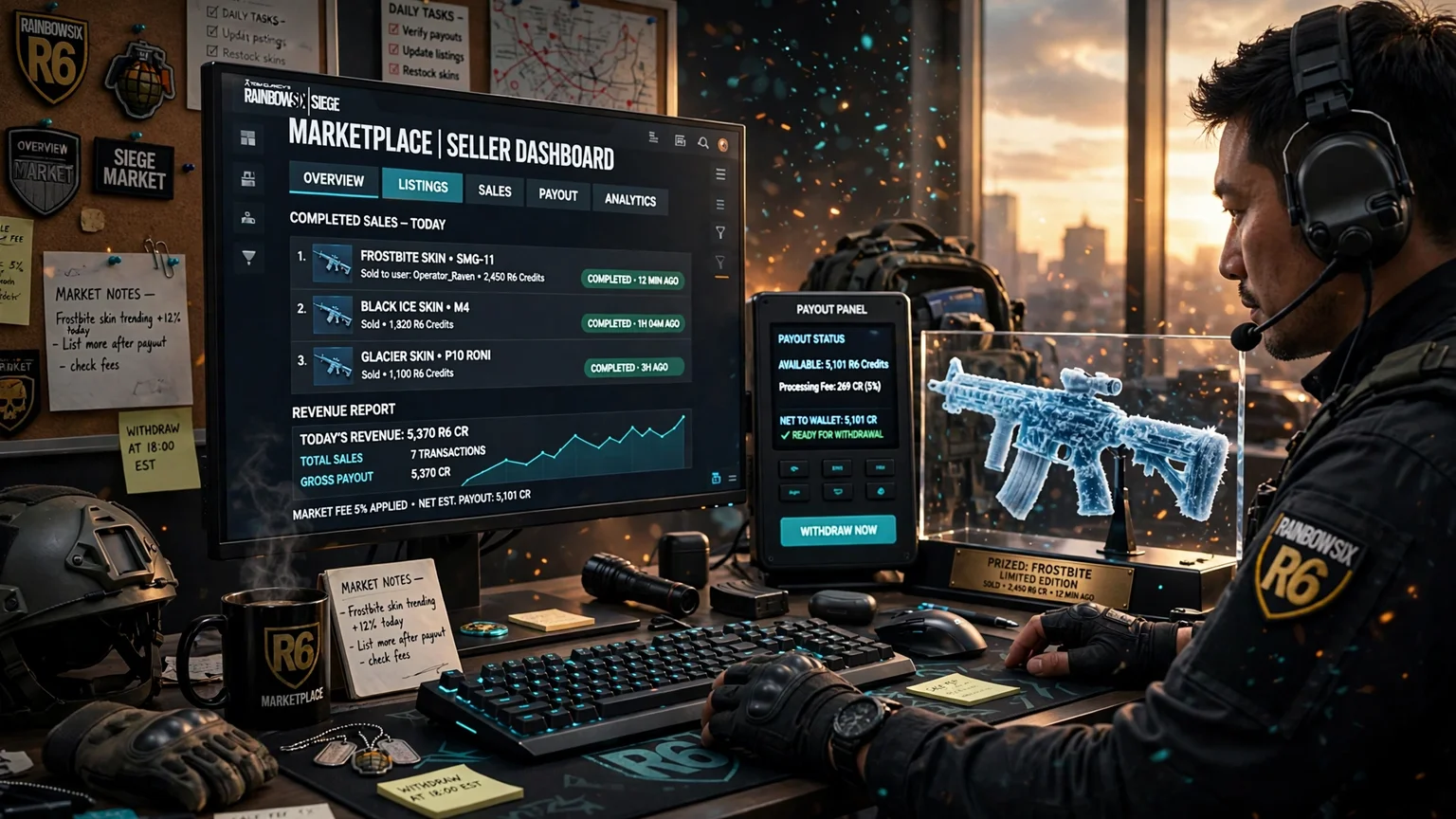
Step 1: Choose What to Sell, and What to Keep
Start by opening your inventory with fresh eyes. Sort by operator and weapon, and ask a simple question for each item: have I equipped this in the last few months, and would I miss it if it were gone? Items you never equip are strong selling candidates. Items tied to a favourite operator, a completed set, or a personal memory are usually worth keeping, even if they might sell well. A smaller inventory you love beats a larger one you ignore.
Also think about sets. If you own three pieces of a four-piece operator set, selling one piece may break a look you later regret losing. Check the full set before you list anything that belongs to it. On the other hand, duplicate-style items, skins for weapons you have replaced, and finishes that clash with your current loadouts are easy wins. Make a shortlist of five to ten candidates first, then narrow it down to the two or three you feel most confident selling. Starting small teaches you the process without risking items you might later want back.
Step 2: Research Before You Set a Price
Pricing is where new sellers make the most mistakes, usually by guessing. Before you list anything, research similar items on the marketplace. Look at current listings for the exact same item, not just similar-looking skins, and note the range of terms sellers are showing. Also check our prices overview at R6 Marketplace prices for general context, but remember that any price you see is a snapshot. Supply changes every day as players list and buy.
Think about your goal. If you want a quick sale to fund a specific purchase, a competitive listing near the lower end of the current range makes sense. If you own a rare item and you are happy to wait, a higher listing may be reasonable, but be honest with yourself about how long you are willing to wait.
An item listed far above every comparable listing often sits untouched while fairer listings sell around it. Experienced sellers also watch timing: weekends and evenings in the United States tend to bring more browsing, but there is no magic hour that guarantees a sale. Patience and fair pricing beat timing tricks every time.
Step 3: Create a Clear, Honest Listing
When you create a listing, accuracy matters more than clever wording. Confirm the exact item, weapon, and operator from your inventory, and double-check that you have selected the right version. A listing for the wrong weapon, even by accident, creates confusion, disputes, and a poor experience for the buyer. Take your time on this screen. There is no reward for rushing through it.
Set your terms carefully and review them before you confirm. Read the full summary the platform shows you, including what you will receive if the item sells and any deductions the platform applies. This is where the fee question belongs.
Any specific fee percentage, limit, or cooldown figure you read in a fan guide should be treated as a fan-guide report, not verified official policy, unless the official platform confirms it at the moment you list. Fees, limits, and rules can change, so the numbers on your own listing screen are the ones that matter. If anything on that screen surprises you, pause and reconsider your price before confirming. A sale you understand fully is always better than a sale that leaves you confused afterwards.
Step 4: Understand Payouts in Marketplace Balance
When your item sells, you receive value in the marketplace balance system, which you can then use for other purchases inside the marketplace. For United States sellers, the key point is to plan around balance, not cash. Do not list items expecting a direct bank payout unless the official platform itself clearly offers that route for your account at that time. Most sellers use their earnings to buy skins they actually want, which keeps the hobby self-sustaining and fun.
Keep your own simple records. Note what you listed, when it sold, and what balance you received. This habit helps you learn which items sell well, which prices work, and how long different kinds of listings take. It also helps if you ever need to contact official support about a sale, because you will have clear facts ready. Never share those records, your password, or your authentication codes with another player, even if they claim they can help you sell faster. Legitimate selling happens entirely inside the platform, through your own account, with no middleman needed.
Step 5: Manage Unsold Listings Without Panic
Not every listing sells immediately, and that is normal. Rare items need the right buyer to appear. Common items face heavy competition from many similar listings. If a listing has waited a while, resist the urge to panic and slash the price dramatically. First, re-check the market: have new listings appeared at lower terms? Has demand shifted? Is your item still described accurately? Sometimes a small, thoughtful adjustment is enough. Sometimes the right move is simply to wait, especially if you set a fair price to begin with.
You should also review your listings regularly and remove or adjust anything you no longer want to sell. An old listing you forgot about can sell at a price you no longer consider fair, so keep your active listings intentional. Set a personal review routine, perhaps once a week, to check what is still listed, what has sold, and what you want to change. Sellers who manage their listings calmly, like a small shopkeeper tending a shelf, consistently do better than sellers who list everything at once and never look back.
Seller Safety Rules for US Players
Safety for sellers mirrors safety for buyers, with one extra caution: never complete a sale outside the marketplace. If a buyer messages you offering extra money to cancel your listing and trade privately, decline. Off-platform deals remove every protection the marketplace provides, and they are a common route to scams. The same applies to anyone offering to list items on your behalf, boost your sales for a fee, or verify your account through a link they send. Your account should only ever be handled by you, through the official route.
Before you sell anything of value, confirm your account meets the current requirements at R6 Marketplace requirements and review the general how-to at How to use R6 Marketplace. Keep two-factor authentication on, use a strong unique password, and be wary of fake marketplace sites that copy the real design. Bookmark the official route once you have confirmed it, and treat any unexpected login request as suspicious until proven otherwise.
Frequently Asked Questions
How long does it take for an item to sell?
It varies widely. Common items with many competing listings may take time, while a fairly priced rare item can sell quickly when the right buyer appears. Set a fair price, be patient, and review your listing weekly rather than changing it every hour.
What do I receive when my item sells?
You receive value in the marketplace balance system, as shown on your listing and sale confirmation. Do not assume a direct cash payout unless the official platform clearly states that route for your account. Always read your own sale summary carefully.
Are there fees when selling?
Marketplace platforms typically apply deductions or rules to sales, but exact figures can change. Treat any fee, limit, or cooldown number in a fan guide as a report, not verified official policy, and rely on the figures shown on your own listing screen at the time you sell.
Can I change or cancel a listing?
In general, sellers can manage active listings through the platform, but exact options depend on the listing's status and current platform rules. Check your listings page regularly and act promptly if you change your mind about an item.
What if a buyer tries to move the deal off the platform?
Decline politely and keep the deal inside the marketplace, or walk away entirely. Off-platform deals remove protections and are a common scam pattern. A genuine buyer will be happy to complete the purchase through the official listing.
Related guides: Why Cant I Sell on R6 Marketplace? An Easy Sell-Blockers Guide, R6 Marketplace Buy Order vs Sell Order: An Easy Order-Book Guide, Dispute Resolution.

Final Conclusion
Selling on the R6 Marketplace works best as a calm, organised habit: choose items you truly no longer need, research comparable listings, set a fair price, read your listing summary carefully, and manage unsold items without panic. For United States sellers, the payout to remember is marketplace balance for future purchases, and the fee figures to trust are the ones the official platform shows you at the time you list, not numbers quoted in old guides or chat messages.
Start small, keep clear records, protect your account, and never let a buyer pull you off the platform. Done that way, selling refreshes your collection, helps other players find items they love, and keeps trading enjoyable rather than stressful. Your unused skins deserve better than gathering dust, and your future loadout will thank you for the patience.
Official source: Rainbow Six Siege.